Waste plastic balers and ordinary waste paper balers share similar functional goals—both are used to compress recycled materials to reduce transportation costs. However, due to differences in the physical properties of the materials being processed, they differ significantly in structural design, technical parameters, and applicable scenarios.
1. Differences in Material Characteristics and Compression Requirements: Waste plastics (such as PET bottles, films, and rigid plastics) have low density, high elasticity, and irregular shapes. Compression requires overcoming the material's rebound force; therefore, plastic balers are typically equipped with higher pressure systems (pressure ranges from 200-500 tons, while waste paper balers are mostly 50-200 tons). Waste paper has a loose fiber structure and is easily shaped after compression, requiring lower pressure, but uniform feeding is crucial to avoid jamming.
2. Equipment Structure and Functional Design:
Plastic balers often use wear-resistant steel and reinforced hydraulic systems. Some models integrate heating modules to reduce plastic rebound through heat melting; the feed inlet is wider to accommodate large-volume plastic bottles or films. Waste paper balers emphasize a dustproof, sealed structure to prevent paper scraps from flying around, and their blades are designed to be sharper to cut cardboard fibers. Some plastic balers also have a pre-shredding function, while waste paper balers typically do not require this feature.
3. Energy Consumption and Maintenance Costs: Plastic compression requires continuous high-pressure output, resulting in 30%-50% higher energy consumption per unit compared to waste paper balers. Molten plastic easily produces residues, requiring regular cleaning of hydraulic lines and heating components, leading to higher maintenance frequency. Waste paper balers, on the other hand, require focused maintenance of the cutters and conveyor belts to prevent paper fiber entanglement.
4. Application Scenarios and Economics: Waste paper balers are widely used in paper mills, supermarkets, and other scenarios that produce well-formed paper products, with a baling density of approximately 500-800 kg/m³. Plastic balers are suitable for recycling stations, chemical plants, etc., producing plastic bales with a density of 800-1200 kg/m³, but the purchase cost of plastic balers is typically 40%-60% higher than that of comparable waste paper balers. The selection of the two types of equipment should be based on a comprehensive consideration of the type of material, the processing volume, and the long-term operating costs. Optimized design can significantly improve recycling efficiency and economic benefits.
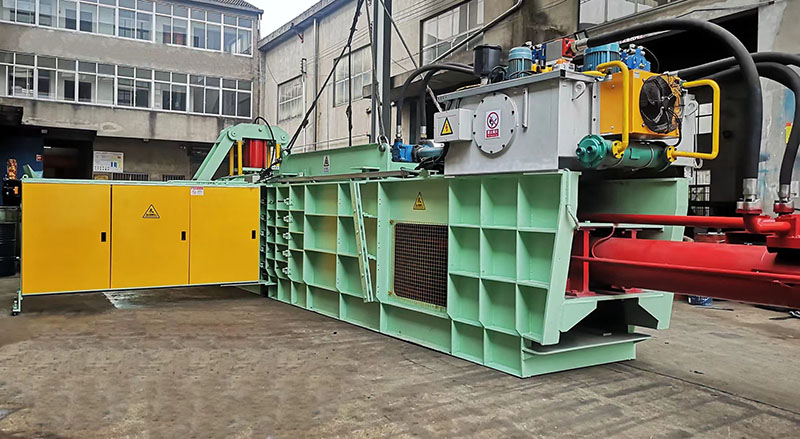
Nick mechanical
hydraulic baling machine is specially used in the recovery and packaging of loose materials such as waste paper, waste cardboard, carton factory, waste book, waste magazine, plastic film, straw and other loose materials.
https://www.nickbaler.com
Email:Sales@nkbaler.com
WhatsApp:+86 15021631102